
Registered NDIS Provider · Servicing Australia


Risk Assessments in Disability Support: What They Are and Why Providers Do Them

Risk assessments sit quietly underneath good disability supports. They are rarely the reason someone chooses a provider, yet they shape almost everything that matters day to day: safety, stability, confidence to try new things, and the consistency of routines that make independent living possible.
Done well, a risk assessment is not a form that gets filed away. It is a structured conversation that turns a person’s goals and context into practical actions that protect wellbeing while still leaving room for choice.
What a risk assessment is (and what it is not)
In disability support, a risk assessment is a systematic, person-centred process used to identify hazards, consider how likely they are to occur, estimate the possible impact, and decide what sensible controls should be in place.
It is also a values statement.
A good provider is not trying to eliminate risk completely, because a risk-free life is not a life most people would accept. The aim is to reduce risk to a manageable level while respecting the participant’s rights, preferences, and the “dignity of risk” that sits behind choice and control.
A risk assessment is not:
- a judgement about someone’s capacity or character
- a reason to say “no” by default
- a one-off event that never changes
- a way to shift responsibility onto the participant or family
Why providers do risk assessments
Providers do risk assessments because they have a duty of care, and because the NDIS framework expects registered providers to have effective governance and operational systems that identify and manage risk. That includes risks to participants, workers, and the organisation.
There is also a more human reason. The best supports feel calm and predictable. That calm is built on preparation.
When risks are actively managed, participants can pursue goals with less disruption: fewer avoidable injuries, fewer missed shifts due to unclear instructions, fewer emergency responses driven by confusion, and fewer situations where a preventable issue becomes a crisis.
What a disability support risk assessment usually covers
Risk is broader than physical safety. It includes health, behaviour, environment, communication, and service delivery reliability.
The exact scope depends on the support type. Supported Independent Living (SIL) brings different considerations than in-home supports, community participation, Short Term Accommodation (STA), Medium Term Accommodation (MTA), Specialist Disability Accommodation (SDA access), or Community Nursing Care.
Here is a practical snapshot of common domains.
| Risk domain | What it can look like in daily life | Examples of sensible controls |
|---|---|---|
| Physical safety | Falls, burns, unsafe transfers, choking risks | Home setup changes, mobility aids, mealtime support, manual handling practices |
| Health and clinical | Medication errors, seizures, pressure injuries, infections | Medication prompting systems, nurse oversight, escalation pathways, clinical documentation |
| Behaviour and distress | Escalation in specific contexts, self-harm risk, aggression, absconding | Positive behaviour strategies, predictable routines, staff consistency, proactive de-escalation plans |
| Environmental | Unsafe housing features, community access barriers, emergency readiness | Lighting and trip hazard checks, access planning, smoke alarms, emergency contacts and drills |
| Social and safeguarding | Exploitation, coercion, isolation, financial risk | Safe community engagement plans, education on consent, clear boundaries, reporting pathways |
| Service delivery | Roster gaps, poor handovers, unclear responsibilities | Consistent rostering, shift notes, communication protocols, incident and complaint systems |
A single issue can sit in more than one domain. A communication barrier can raise clinical risk. Service inconsistency can raise behaviour risk. Good assessments join the dots.
The core steps: from identifying hazards to practical controls
Most providers follow a cycle that mirrors standard risk management practice. The names vary, yet the sequence is similar.
A provider may start with:
- reviewing existing plans and reports
- talking through daily routines
- observing supports in context
- checking the environment (home, vehicle, community settings)
- clarifying goals for the next few months
Then the provider will analyse and rate risks. This is the point where judgement matters. Two people can face the same hazard, yet the likelihood and impact can be completely different based on mobility, communication, support availability, fatigue, or medical history.
After that comes evaluation and treatment:
- Is the current level of risk acceptable to the participant and the team?
- Are there controls already working?
- What needs to change, and who is responsible for the change?
- What evidence will show that the control is actually working?
Documentation follows, but documentation is not the end. The assessment only becomes real when it changes practice on the floor.
Likelihood, impact, and the “priority problem”
Many services use a risk matrix (likelihood x consequence) to sort risks into priorities. This can be helpful, with one warning: matrices can create a false sense of precision.
A more useful mindset is to treat ratings as a starting point for action and communication. What matters is whether the control is matched to the person’s real world.
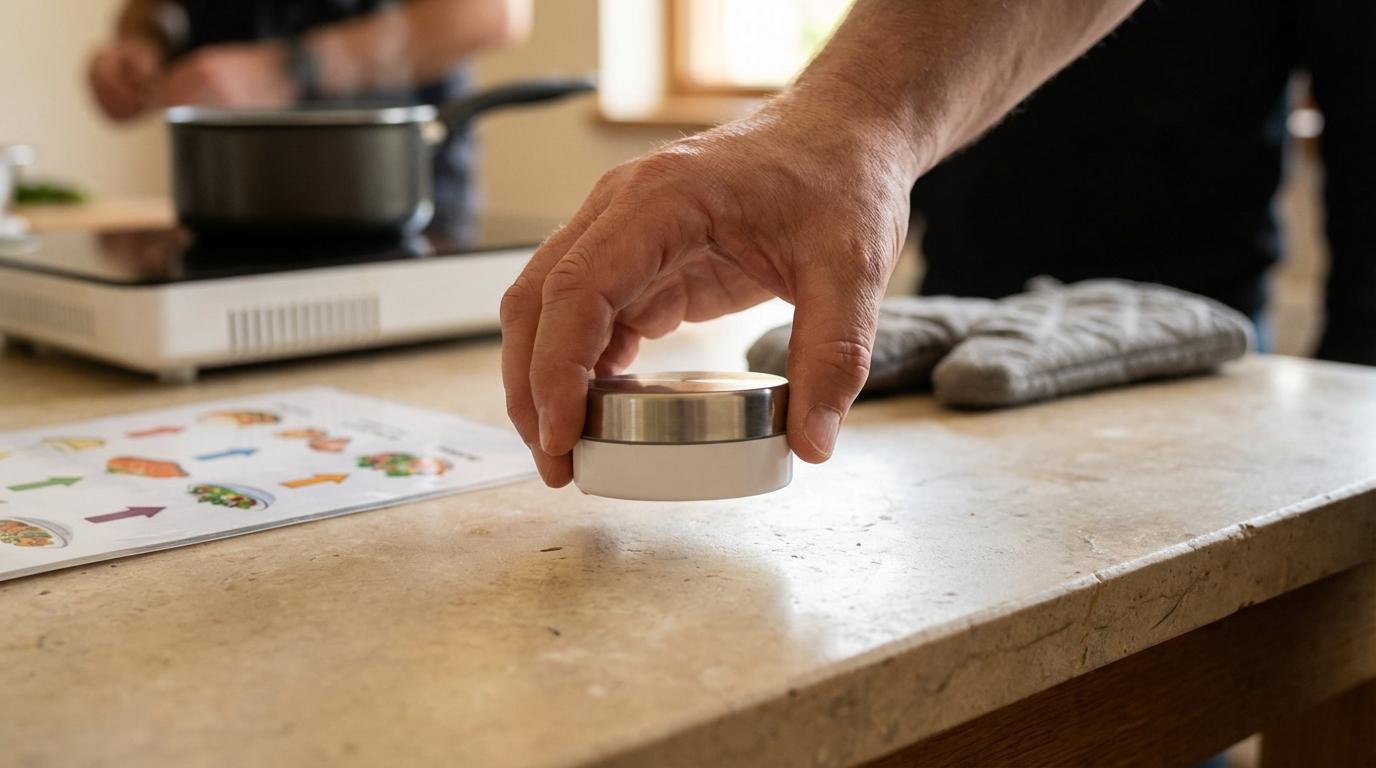
A small example. A participant may want to cook independently. The hazard could be burns. The response is not necessarily “no cooking”. It might be a staged plan: adapted equipment, a clear recipe sequence, support worker prompts at specific steps, and gradually reduced supervision as skills grow.
The priority is not “avoid burns at all costs”. The priority is “support safe skill-building while responding early if risk rises”.
Choice and control: how risk assessments can support independence
Risk assessments can either widen a person’s world or shrink it.
When providers treat risk as a compliance exercise, participants may experience blanket restrictions. That approach can create new risks: loss of confidence, reduced community access, lower physical conditioning, or frustration that builds over time.
When providers treat risk as collaborative planning, participants are more likely to attempt meaningful goals with well-chosen safeguards. That can include trying new activities, building daily living skills, or transitioning to more independent routines.
This is where language matters. The conversation works best when it focuses on what the person wants, then builds controls around that.
Who should be involved
Risk assessments are strongest when the right people contribute, and when the participant remains central in decisions.
A collaborative approach often includes the participant, family or informal carers (when the participant wants them involved), support workers, a support coordinator, and relevant clinicians.
To keep the process clear, it helps to be explicit about roles. The following prompts can guide participation:
- Participant voice: what feels safe, what feels worth the risk, what past experiences matter
- Family and carers: daily context, early warning signs, what has worked at home over time
- Support workers: practical feasibility, staffing patterns, what happens during real shifts
- Clinicians: clinical risk factors, mobility or swallowing guidance, medication considerations
- Provider governance: incident systems, training, supervision, rostering capacity, reporting lines
This is not about having more people in the room. It is about having the people who can actually implement the plan.
Turning controls into everyday practice
Controls fail when they are vague. “Monitor closely” is not a control. It is an instruction that leaves too much to interpretation, then falls apart with staff changes.
Stronger controls are observable and teachable. They can be trained, audited, and improved.
Examples of practical controls include clear mealtime positioning instructions, specific lock-up procedures for medications, defined ratios for community access where needed, a step-by-step response to early agitation signs, and a documented escalation pathway for clinical concerns.
Consistency matters here. People do better when the team does the same thing, the same way, for the same reason.
Review is part of risk management, not an optional extra
A risk assessment should be reviewed when circumstances change, and also on a regular schedule. The timing differs by service type and complexity, yet the principle is stable: risks move.
Common triggers for review include changes in health, a new medication, a change in living arrangement, a pattern of incidents or near misses, changes to informal supports, a shift in goals, or staff reporting that a control is no longer working in practice.
Reviews can also be positive. A participant may gain skills, confidence, and capacity. In that case, the best risk decision might be stepping supports down in a planned way.
What good documentation looks like (without drowning in paperwork)
Documentation should make supports safer and clearer, not heavier.
In practice, good records tend to share a few features: plain language, clear ownership, version control, and a link to the participant’s goals. They also make it easy for new staff to get it right on day one.
If a provider can show how a risk assessment connects to shift notes, incident reporting, staff training, and supervision, that is a strong sign the system is alive.
Questions participants and support coordinators can ask a provider
You do not need to be an auditor to ask sensible questions. Clear answers often indicate a mature service.
Here are a few to consider during intake or review meetings:
- How do you balance dignity of risk with duty of care?: ask for an example where the provider supported a goal while managing risk
- Who writes and who approves risk controls?: look for shared decision-making, plus oversight when controls affect safety
- How are staff trained on the controls?: seek specifics on handover processes, competency, and supervision
- What triggers a review?: the provider should describe practical triggers, not only “annual review”
- How do you manage roster consistency?: stability reduces risk, especially where behaviour support or clinical routines are involved
- How do you report and learn from incidents?: look for calm, transparent processes and a focus on improvement
How Alpha Community Care approaches risk assessment in practice
As a registered NDIS provider, Alpha Community Care operates within the NDIS Practice Standards and Code of Conduct, with a strong focus on structured, compliant, outcomes-driven supports.
In day-to-day service delivery across Supported Independent Living (SIL), in-home supports, community participation, Community Nursing Care, STA, MTA and SDA access, risk assessment is treated as part of support planning rather than a separate paperwork task. The intent is practical: clearer routines, safer environments, and more consistent decision-making across the team.
Alpha Community Care also places weight on communication and accessibility. Providing Easy Read information about key processes, including risk assessment, helps participants take a real role in decisions that affect their home, their routines, and their goals. Combined with screened staff, consistent rostering where possible, and structured risk management processes, this approach supports stability for participants and more predictable working conditions for teams.
Risk assessments are not the opposite of independence. When they are done with care, they are one of the main ways independence becomes sustainable, week after week, even as goals grow and life changes.
