
Registered NDIS Provider · Servicing Australia



Finding SDA Housing in Melbourne 2026: A Guide
Learn how to find Specialist Disability Accommodation in Melbourne for 2026. Understand eligibility, SDA vs SIL, and what to ask providers.
Table of Contents
- What Is Specialist Disability Accommodation and Why It Matters
- NDIS SDA Eligibility: Who Can Access This Support
- SDA and SIL Difference: Choosing the Right Housing Model
- SDA Vacancies in Melbourne: Where and How to Search
- Critical Questions to Ask SDA Providers Before Committing
- What Makes a Good SDA Home: Features and Design Considerations
- Your Next Steps: Getting Started With SDA Housing
- Frequently Asked Questions
Last Updated: October 15, 2026
What Is Specialist Disability Accommodation and Why It Matters
Specialist Disability Accommodation (SDA) is a housing option funded through the NDIS for people with complex disability support needs. It’s purpose-built or significantly modified housing designed to support people who need 24-hour assistance or have very high physical support needs.
SDA differs from standard housing. It includes features like wheelchair access, accessible bathrooms, emergency call systems, and layouts that make daily living safer and more independent. The accommodation itself is funded through your NDIS plan, separate from the support services you receive.
Many people with disabilities find that standard housing doesn’t meet their needs. Stairs, narrow doorways, and inaccessible bathrooms create barriers to independence. SDA removes these barriers. It lets you live in a home designed for your specific requirements.
The goal is straightforward: give you a safe, accessible home where you can be as independent as possible. When your housing works for you, everything else becomes easier.
NDIS SDA Eligibility: Who Can Access This Support
To access SDA funding through the NDIS, you need to meet specific criteria. Not everyone with a disability is eligible, and understanding the requirements matters before you start searching.
You must be an NDIS participant first. That means you have a confirmed disability, you’re under 65 years old, and you meet the residency requirements. You can check your eligibility on the NDIS website.
Beyond basic NDIS participation, SDA eligibility focuses on your support needs:
- You have a significant disability
- You need 24-hour support or very high physical support needs
- Standard housing won’t meet your needs even with modifications
- You require accommodation to live in the community
The NDIS also considers whether you’re at risk of homelessness or living in unsuitable conditions. If you’re in hospital or institutional care and could move to community housing with SDA support, you may qualify.
Your NDIS planner assesses whether SDA is appropriate for your situation. They look at your goals, your support needs, and whether housing is the right solution. If you’re unsure whether you qualify, ask your support coordinator or contact the NDIS directly.
Pro Tip
Start conversations about SDA early. If you think you might need it, mention it to your NDIS planner at your next planning meeting. Planning takes time, and getting ahead helps.
Start conversations about SDA early. If you think you might need it, mention it to your NDIS planner at your next planning meeting. Planning takes time, and getting ahead helps.
SDA and SIL Difference: Choosing the Right Housing Model
People often confuse SDA with Supported Independent Living (SIL). They’re different, and understanding the difference helps you choose what’s right for you.
Supported Independent Living (SIL) is support funding you use to pay for help with daily tasks. You get money in your NDIS plan to hire support workers who help you with things like cooking, cleaning, personal care, and community access. You might live in a house you own, rent, or share with others. The support is flexible and tailored to what you need.
SDA is the housing itself. It’s the building or the modifications that make it work for you. SDA funding covers the cost of the accommodation. It’s separate from support funding.
Here’s the key difference: SIL is about paying for helpers. SDA is about paying for the right home.
Many people use both. You might live in SDA-funded accommodation and also have SIL support funding to pay workers who help you in that home. They work together.
Some people only need SIL. They live independently or with family and use support workers to help them manage daily life. They don’t need specially designed housing.
Others need SDA but manage their support differently. They might use SIL funding, or they might arrange support through other means.
Your NDIS planner helps you work out what you need. Be honest about your goals and your support needs. That conversation shapes what goes into your plan.
Key Takeaway
SIL is support money. SDA is the home itself. You can have one, both, or neither depending on your needs.
SIL is support money. SDA is the home itself. You can have one, both, or neither depending on your needs.
SDA Vacancies in Melbourne: Where and How to Search
Finding SDA housing in Melbourne takes effort, but there are clear places to look.
Start with the NDIS housing register. This is the official list of available SDA properties. You can search by location and see what’s available. Properties are listed with details about accessibility features, support arrangements, and how to apply.
Contact SDA providers directly. Providers manage properties and can tell you about current vacancies and upcoming availability. Alpha Community Care can discuss options with you. Reach out to see what’s available in your area.
Your support coordinator is a valuable resource. They often know about vacancies before they’re widely advertised. They can also help you navigate the application process and understand what each property offers. (Source: NDIS Quality and Safeguards Commission)
Check regularly. SDA vacancies change. A property might not be available today but could open up in weeks. Regular checking increases your chances of finding the right fit.
When you find a property you’re interested in:
- Ask about accessibility features and whether they match your needs
- Understand the support arrangements and how they work
- Ask about the application timeline
- Request to visit if possible
- Clarify what’s included and what’s not
Watch Out
Don’t assume a property is suitable just because it’s listed as SDA. Ask detailed questions about accessibility, support availability, and whether it genuinely meets your needs. A mismatch creates problems later.
Don’t assume a property is suitable just because it’s listed as SDA. Ask detailed questions about accessibility, support availability, and whether it genuinely meets your needs. A mismatch creates problems later.
Critical Questions to Ask SDA Providers Before Committing
Before you commit to an SDA property, ask the right questions. This protects you and helps you find the right home.
About accessibility:
- What accessibility features does the home have?
- Are doorways wide enough for your equipment?
- Is the bathroom accessible?
- Are there grab rails and other safety features?
- Can the home be modified if needed?
About support:
- How is support arranged and funded?
- Who provides the support workers?
- How quickly can they respond if you need help?
- What happens if a support worker calls in sick?
- Are support workers trained for your specific needs?
About the practical details:
- What’s included in the SDA funding?
- What costs do you cover separately?
- How long is the lease or agreement?
- What happens if circumstances change?
- Who do you contact if something breaks or needs repair?
About the community:
- What’s the neighbourhood like?
- How close are shops, medical services, and community activities?
- Is public transport accessible?
- Are there community connections you can make?
Alpha Community Care can answer these questions. We’re transparent about what we offer and what support looks like. If something doesn’t feel right, ask again or look elsewhere. You’re making a major decision about where you’ll live.
What Makes a Good SDA Home: Features and Design Considerations
A good SDA home does more than meet accessibility standards. It supports your independence and helps you live the life you want.
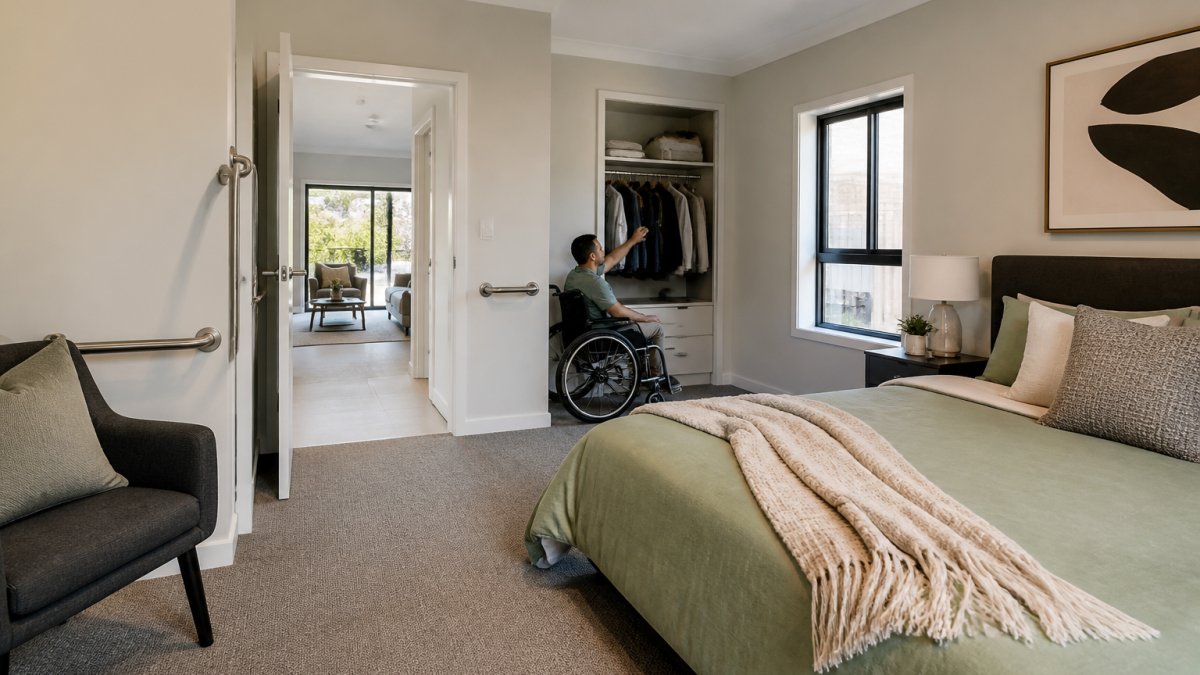
Physical accessibility matters:
- Wide doorways that fit wheelchairs and walking frames
- Accessible bathrooms with grab rails and level-access showers
- Kitchens designed for people with limited mobility
- Ramps or level entry instead of steps
- Adequate lighting throughout
Safety features:
- Emergency call systems that actually work
- Non-slip flooring
- Temperature-controlled water to prevent burns
- Clear pathways with no trip hazards
- Good visibility from bedrooms to common areas
Comfort and independence:
- Rooms sized so you’re not cramped
- Storage you can actually reach
- Windows with natural light
- Outdoor space if possible
- Quiet areas and social areas
Support-friendly design:
- Layouts that let support workers help you safely
- Good communication between rooms
- Space for equipment and supplies
- Laundry facilities that work
- Parking for support workers
A good SDA home feels like home. It’s not clinical or institutional. It’s a place where you can be yourself and do the things that matter to you.
When you visit a property, pay attention to how it feels. Can you imagine living there? Does it support what you want to do? Trust your instincts alongside the practical assessment.
Your Next Steps: Getting Started With SDA Housing
If you think finding SDA housing in Melbourne might be right for you, here’s what to do.
Step 1: Talk to your NDIS planner. Mention that you’re interested in exploring SDA. They’ll assess whether it’s appropriate and help you understand the options. This conversation shapes what gets included in your plan.
Step 2: Get your support coordinator involved. If you have one, they can help you navigate the process and connect you with providers. They know the landscape and can offer practical advice.
Step 3: Start searching. Check the NDIS housing register regularly. Contact providers including Alpha Community Care. Ask detailed questions. Visit properties if you can.
Step 4: Understand the funding. Make sure you know how SDA funding works and what it covers. Ask your planner or coordinator if anything’s unclear.
Step 5: Take your time. This is a big decision. Don’t rush. The right property is worth waiting for.
Frequently Asked Questions
Who is eligible for Specialist Disability Accommodation under the NDIS?
You may be eligible for SDA if you have a significant disability, are an NDIS participant, have high and complex support needs, and require accommodation specifically designed or modified to support your daily living. The NDIS assesses your individual circumstances, including your functional capacity, the support you need, and whether standard housing would meet those needs. Contact your support coordinator or the NDIS to discuss your eligibility.
What is the difference between SDA and SIL housing?
SDA is purpose-built or significantly modified accommodation designed for people with complex physical support needs, featuring specialised accessibility features like wide doorways, accessible bathrooms, and adapted kitchens. SIL provides 24/7 support in standard or minimally modified homes, focusing on assistance with daily living and community participation. The choice depends on your physical accessibility requirements and the level of daily support you need.
How do I find SDA vacancies in Melbourne?
Start by contacting your support coordinator or NDIS planner, who can search the NDIS housing register and connect you with registered SDA providers. You can also reach out directly to SDA providers operating in Melbourne, including Alpha Community Care, who can discuss your preferences. Online NDIS provider directories and the NDIS website also list registered accommodation providers in your area.
What should I ask an SDA provider before choosing a home?
Ask about staffing continuity and how they manage 24/7 support, what happens if staff are unavailable, how the home matches your accessibility and support needs, the process for choosing or customising your accommodation, how they coordinate with other services (like nursing care), and what flexibility exists if your needs change. Understanding their approach to person-centred planning and how they involve you in decision-making is equally important.
Finding the right SDA housing is about more than ticking accessibility boxes. It’s about finding a home that supports your independence and lets you live the life you want. Alpha Community Care understands this. We’ve helped many people find SDA homes that genuinely work for them. If you’d like to explore SDA options or discuss what’s available, get in touch with us. We’re here to help you navigate this process and find housing that fits your needs and your goals.
